





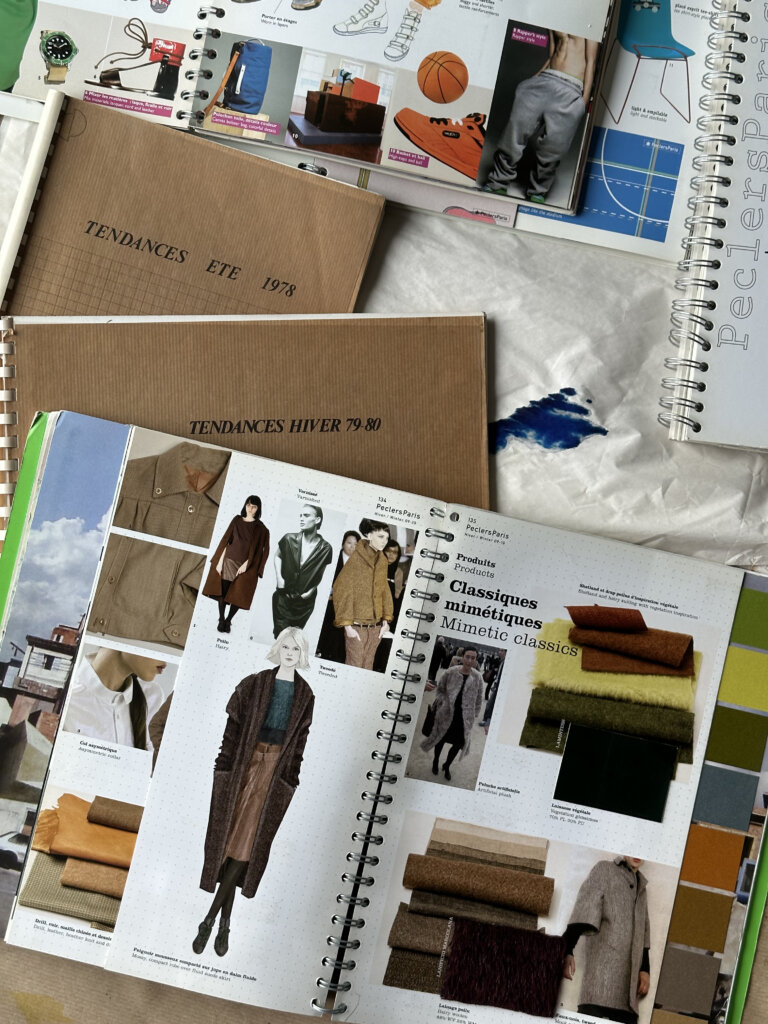
Peclers Paris has donated 170 trend books to the Library of the Musée des Arts Décoratifs. A landmark gesture that places over forty years of creative forecasting — from the 1980s to the 2020s — within the history of fashion and design.
More than a donation, this entry into the collections establishes an entire field of contemporary creative practice as an object of history.
At first glance, these books are tools. Both working documents and creative objects, they bring together images, colors, materials, texts, and intuitions.
Their purpose: to capture emerging signals, anticipate shifts in taste, and guide brands and designers. But as their context changes, so does their status.
THE MATERIALITY OF IDEAS
At Peclers Paris, trends are also shaped on paper.
These books bear witness to that process: collages, swatches, images, annotations. A structured visual construction, where each page organizes and brings into dialogue references, analysis, and intuition. More than a support, the book becomes an object in its own right — almost a work in itself.
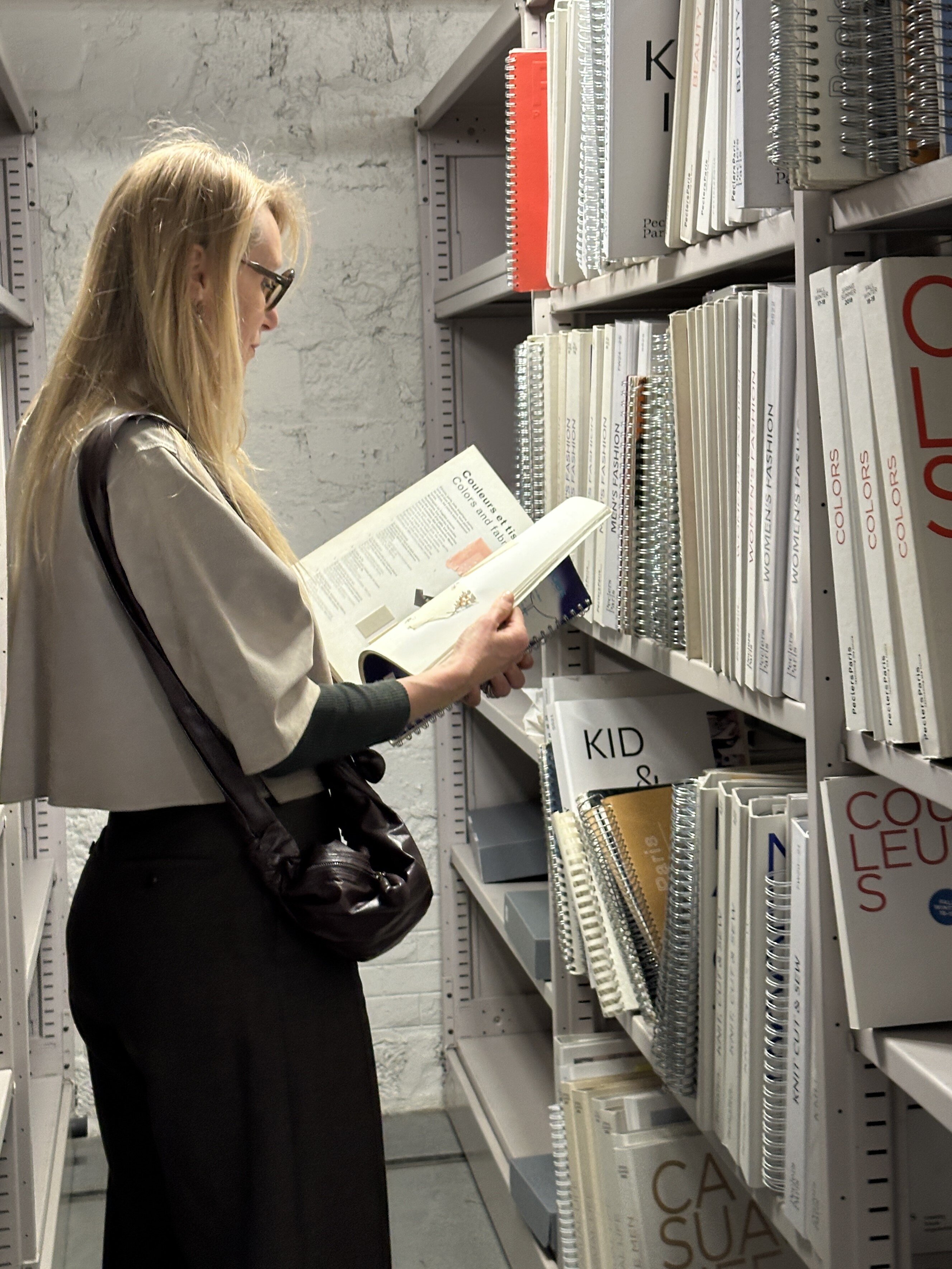
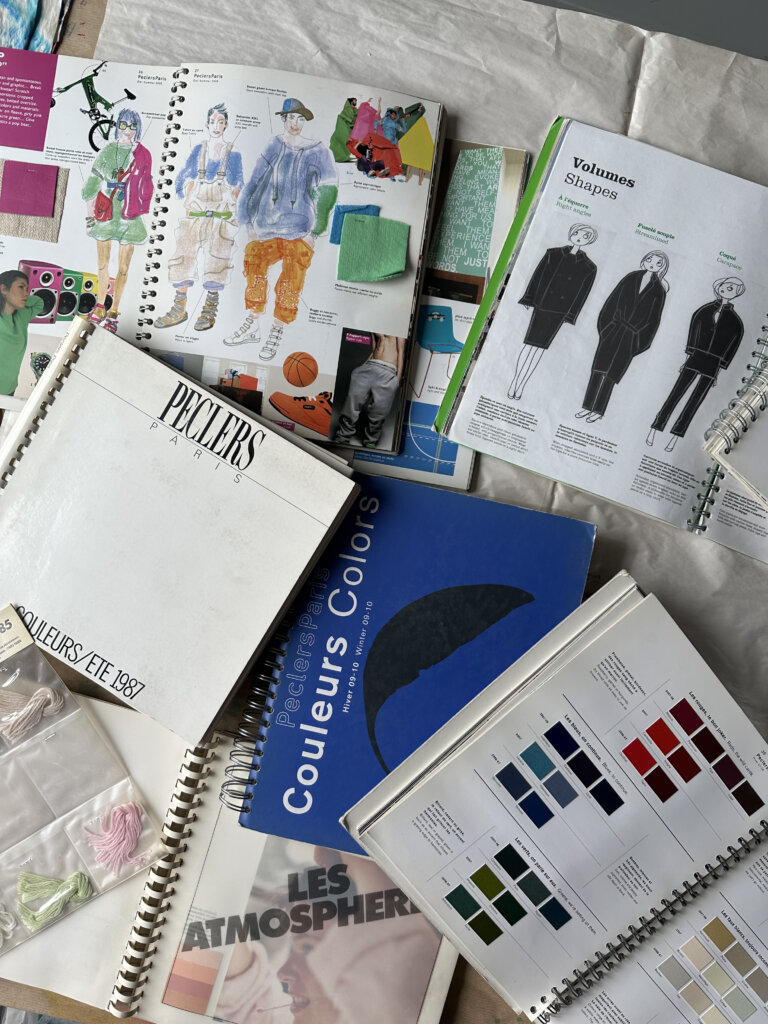
They are tools, of course, but also deeply embodied objects. They reflect the way we work. They bring together references from fashion, but also from art, architecture, and culture at large. This is where our sensibility is shaped. They are grounded both in an analysis of cultural shifts, innovation, and societal change, and in a measure of intuition…
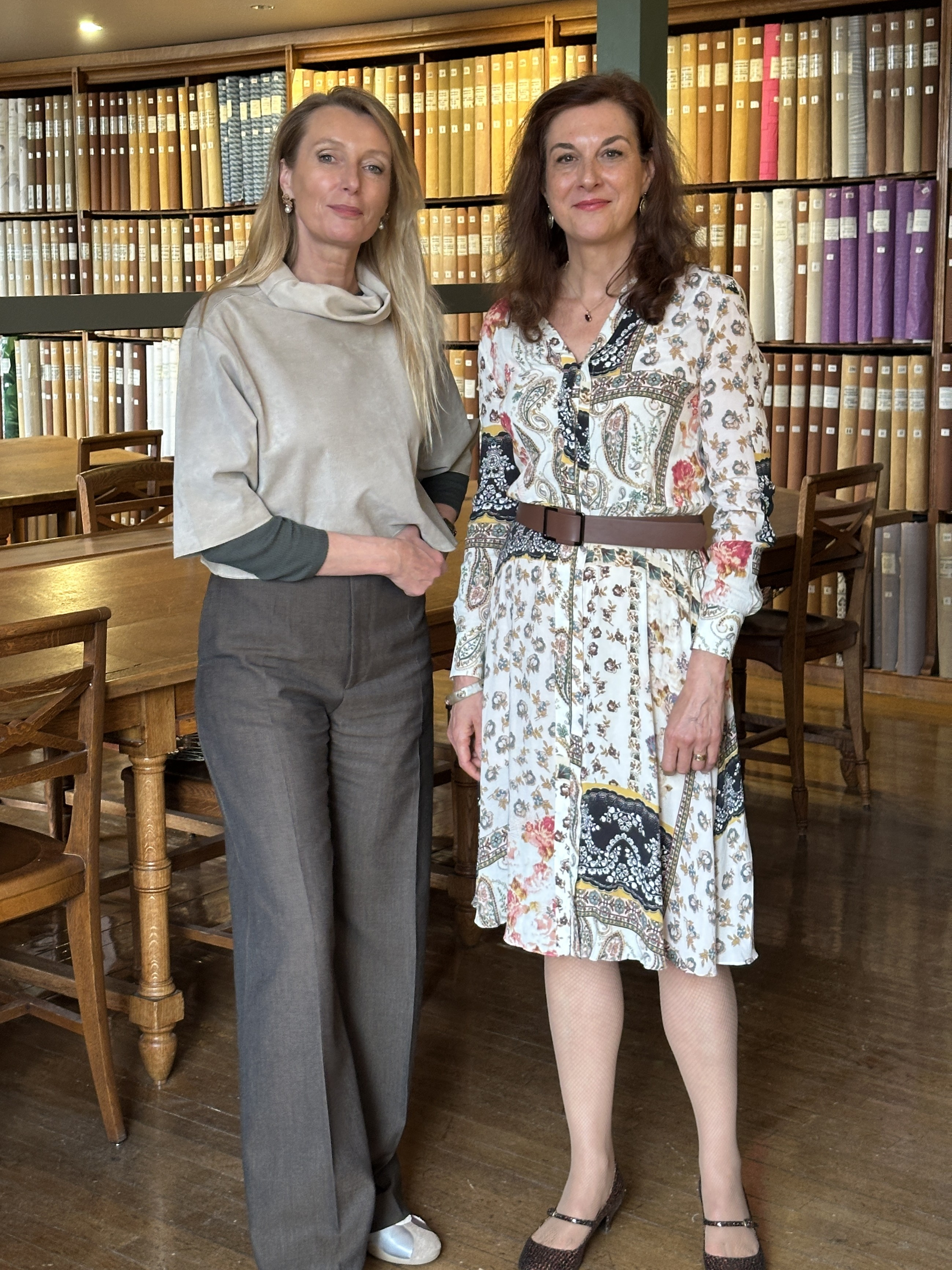
Anne Etienne Reboul, CEO of Peclers Paris
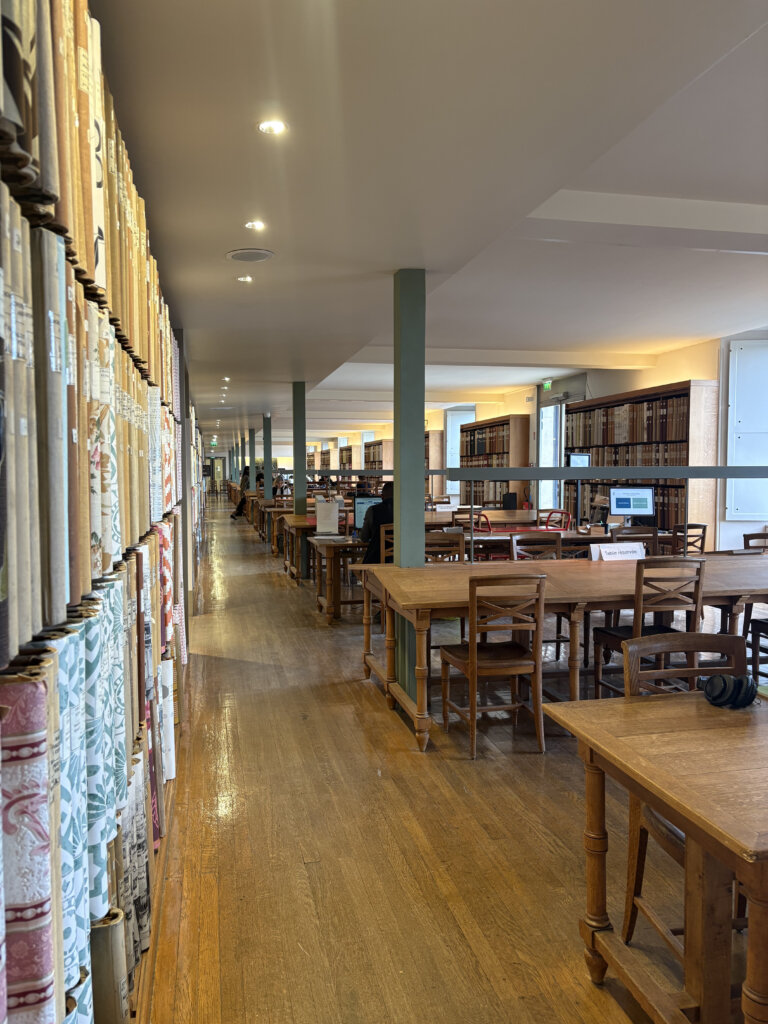
THE MAD LIBRARY, A SETTING FOR THE ARCHIVES OF CREATION
Why the Musée des Arts Décoratifs? Because it is one of the few institutions capable of reading these objects in all their complexity.
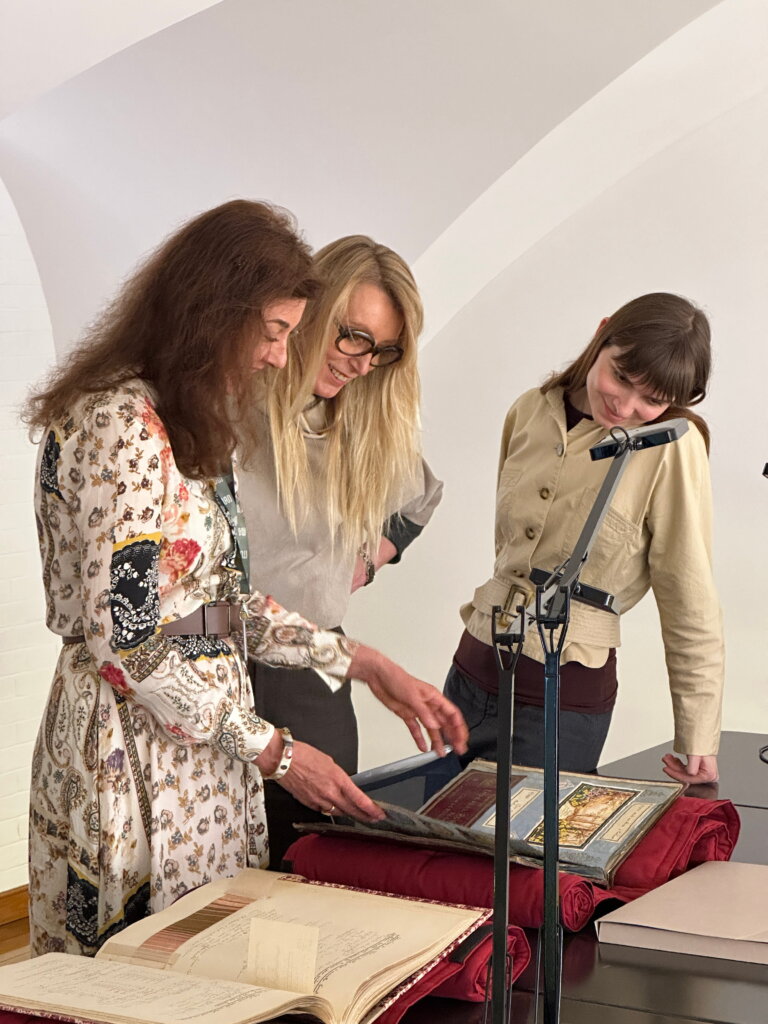
At the intersection of fashion, textile design, and the decorative arts, the museum offers a natural context for these trend books. Here, they enter into dialogue with other major archives—iconography, books, journals, and department store catalogues—and take their place alongside publications such as L’Élégance Parisienne, L’Officiel de la Couleur, as well as early catalogues from Printemps and La Samaritaine.
They also belong to a broader history: that of the style bureaux, now evolved into creative strategy and trend forecasting agencies.
Their inclusion in the Library’s collections marks a form of recognition—one that acknowledges a role long overlooked in the history of creation.
Here, fashion is not only read through its final forms, but through its very genesis.
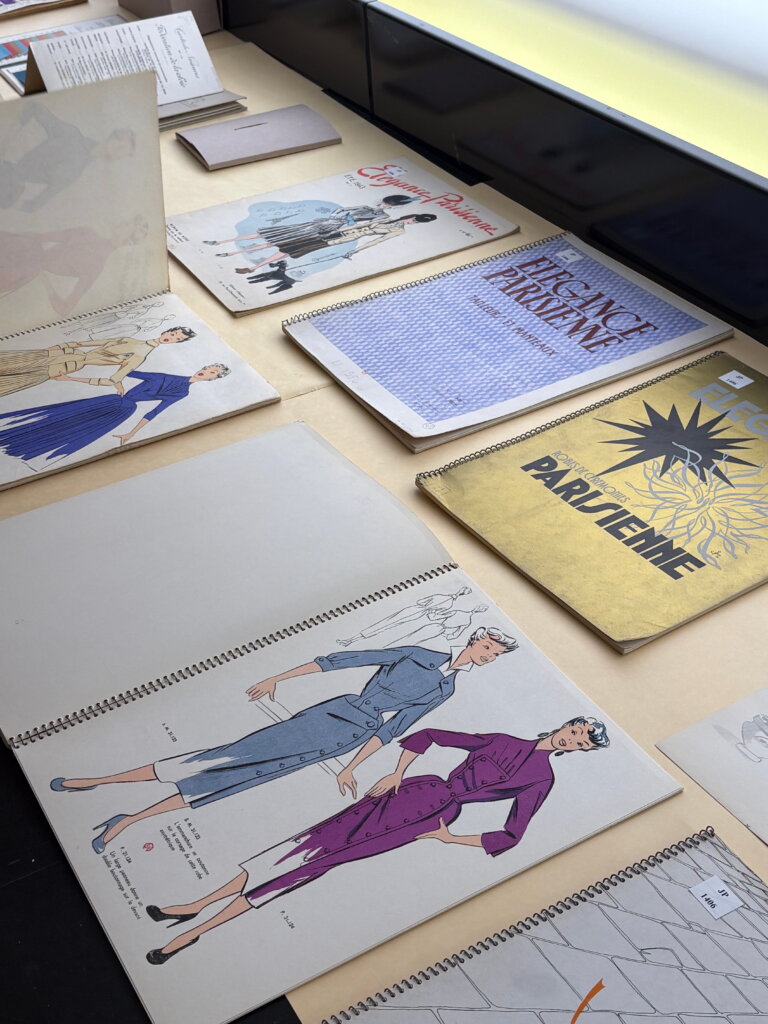
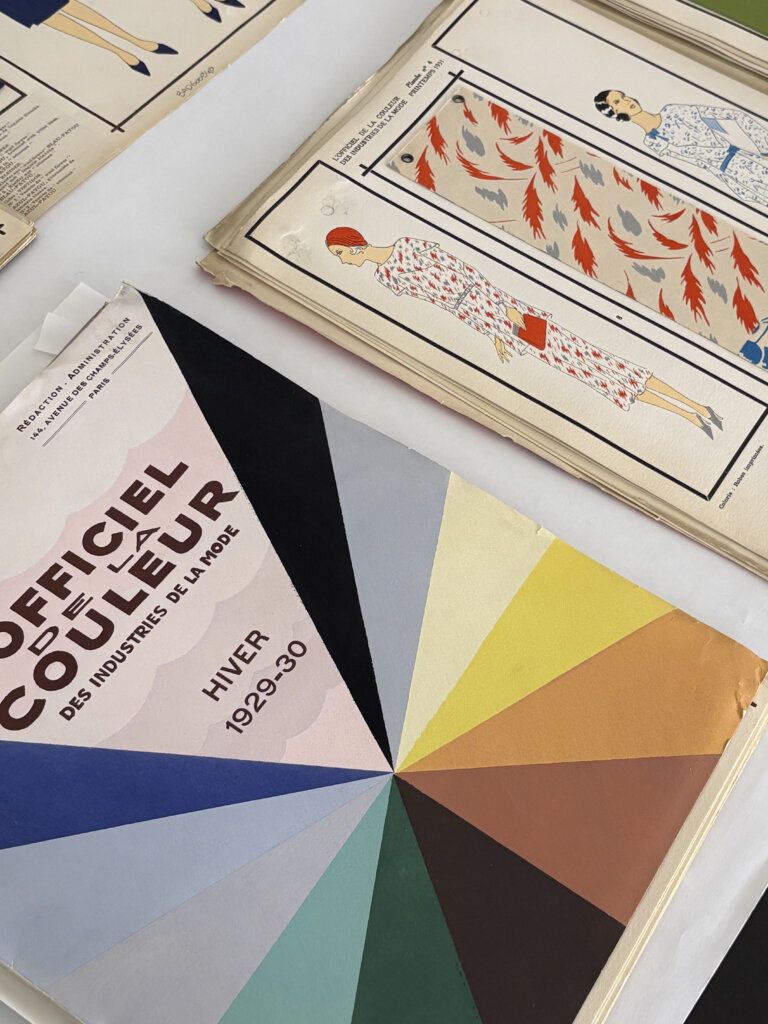
The books are wonderfully eloquent within this collection. They are guardians of memory and embody what shapes society, in its cultural and aesthetic forms.
Anne-Laure Charrier-Ranoux, Head of the Library, Musée des Arts Décoratifs
FASHION HISTORY
These 170 books tell another story of fashion—one that Peclers Paris has helped shape.
From the 1970s onward, the agency became part of a founding movement: that of the style bureaux, which emerged at the heart of the Paris fashion scene to help brands understand and build trends.
Within an ecosystem still taking shape, Peclers Paris introduced a method. Observing, analyzing, anticipating: an approach that does not simply follow fashion, but actively contributes to how it takes form.
Over the decades, the agency has developed a distinctive expertise at the intersection of cultural analysis and creative intuition. It has helped transform trend into a strategic tool—serving brands, but also the creative process itself.
This is the story these books tell. They do not merely document style; they take part in shaping it. They reflect a way of reading the world, extracting signals, and translating them into creative directions.
Through them, an entire history of fashion comes into view.
WHEN FORECASTING BECOMES ARCHIVE
With the inclusion of these trend books in the Library of the Musée des Arts Décoratifs, their reading shifts. Designed to anticipate the future, they are now preserved to shed light on the past.
By entering the Library, they become a form of contemporary heritage: a living record of aesthetic, cultural, and social transformations.
Between Peclers Paris, which anticipates, and the Musée des Arts Décoratifs, which preserves, a dialogue emerges: what once projected the future now becomes an archive of the present.
The entire team at Peclers Paris — including its CEO Anne Etienne Reboul, its founder Dominique Peclers, and all those who have contributed to shaping the agency’s history — share a deep sense of pride and emotion at seeing these books now held within the collections of the Library of the Musée des Arts Décoratifs.
Discover the project on our Instagram, featuring a cross interview with Anne Etienne Reboul, Anne-Laure Charrier-Ranoux, and Jeanne Léopoldine Claustre.